
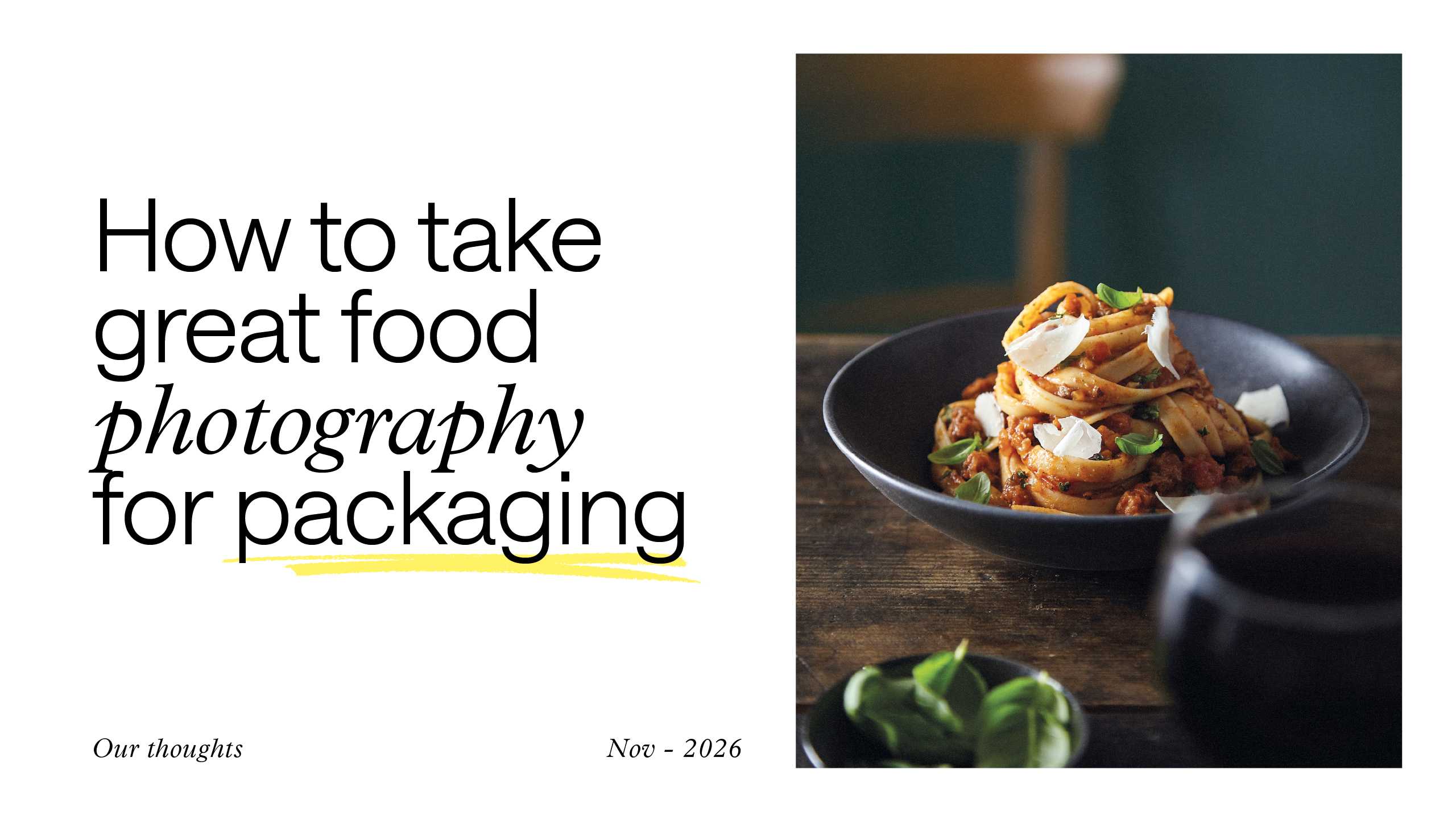
30 | How to capture food photography for product packaging
Great food photography goes beyond taking a good picture. It’s about getting every element right, from lighting and art direction to styling and post-production. Every little detail helps bring the product to life.
The goal is to create an image that looks truly mouth-watering. It needs to capture the same appeal as the real thing, which takes skill, creativity and an understanding of how to make food look good on a screen.
With over 25 years of food photography experience alongside working with iconic brands in food and drink design, we know what it takes to get the right shot.
How we get food photography right
The right person for the right shot
No two food photographers are the same. Each has their own style and strengths, so matching the right person to the brief gives us more creative freedom and flexibility. Relying solely on in-house photographers can limit the look and art direction of a shoot, while a freelance specialist can bring a fresh perspective and new possibilities.
We’ve built a strong network of specialist food photographers, so we know exactly who to call for each job. Some know how to capture ice cream under hot studio lights, while others can photograph chocolate with an irresistible sheen. It’s about finding the right expertise to make every dish look its best.
It’s all in the styling
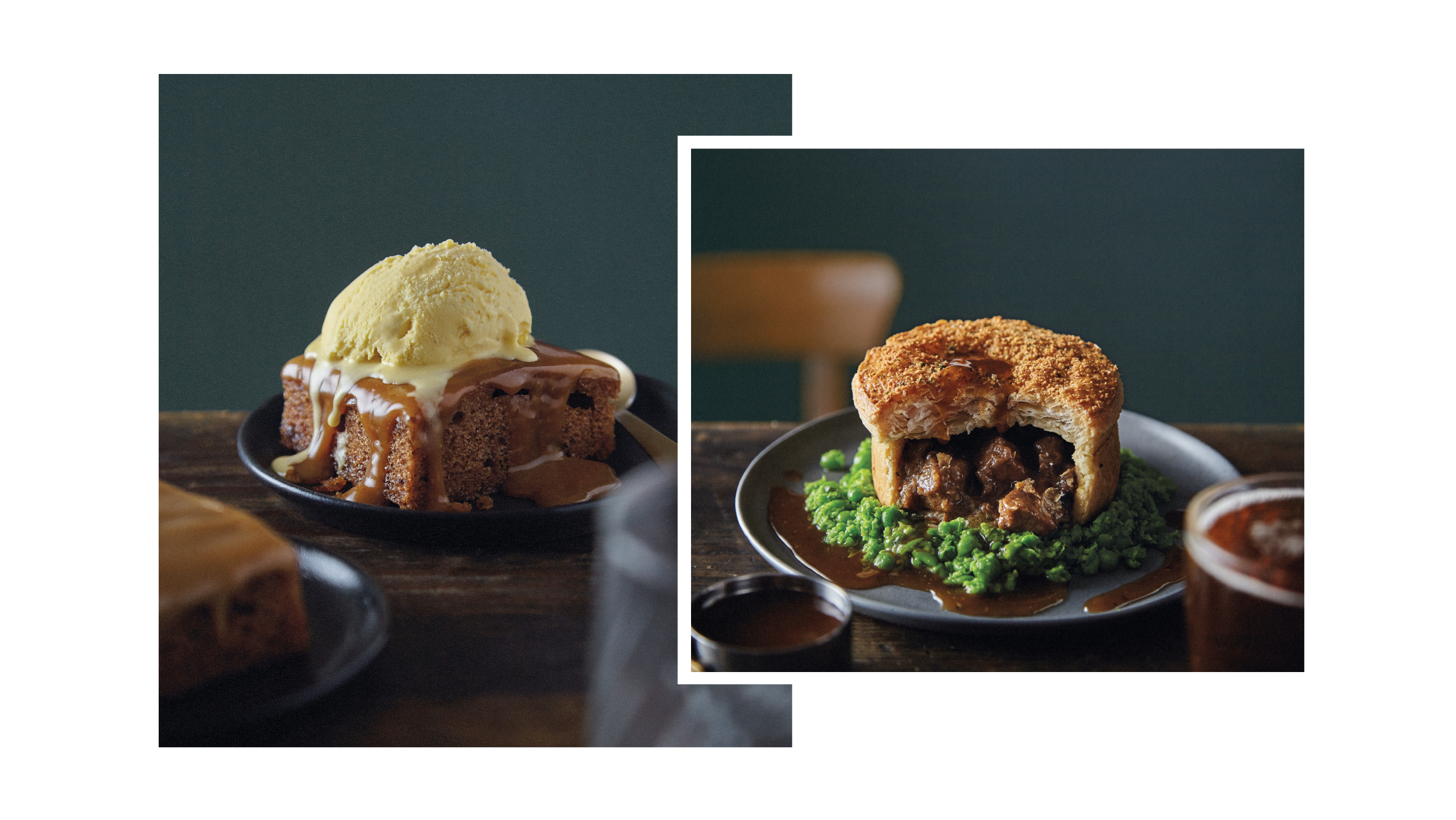
The trick to great food photography is all in the styling.
“Creating an image that looks truly mouth-watering through a camera relies on treating the dish or product as a canvas rather than a subject”. – Jon Dignam, Our Creative Director.
For example, slightly undercooking vegetables keeps them looking more vibrant on camera, while carefully placed crumbs around a cake can help tell a story.
That’s where the right food stylist makes all the difference. We work with exceptional food stylists, some who are ex-chefs and know exactly how to make food look its best. A scattering of seasoning, fresh herbs or a drizzle of sauce can all add character and narrative to a shot.
When ASDA launched its Bistro range, our job was to create packaging that sparked serious food envy and transported customers to a high-end gastropub in the comfort of their own home. The food photography captured each meal from the diner’s perspective, showcasing restaurant-quality food in an atmospheric setting.
The finishing touches
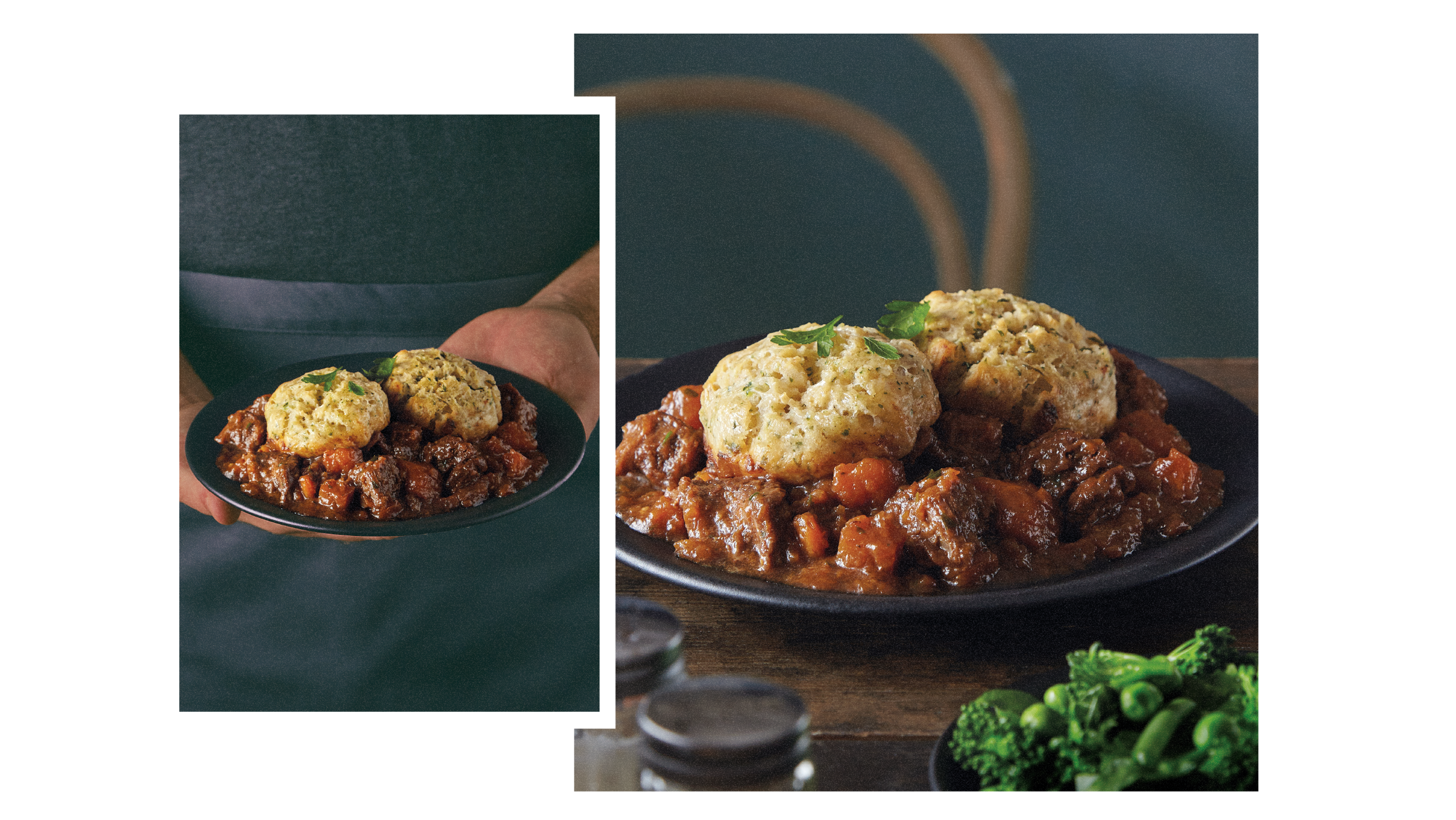
Achieving great food photography goes beyond the photoshoot. Usually, significant retouching is needed to perfect the image and keep the product looking as realistic as it did in person.
You need to know from the start what your retouchers can achieve and what details will be added in post-production. That’s why we plan for it from the very beginning.
Post-production has a huge impact, so we handle it in-house to allow greater control over the final image and ensure every detail feels true to the brand.
What to consider when shooting food photography
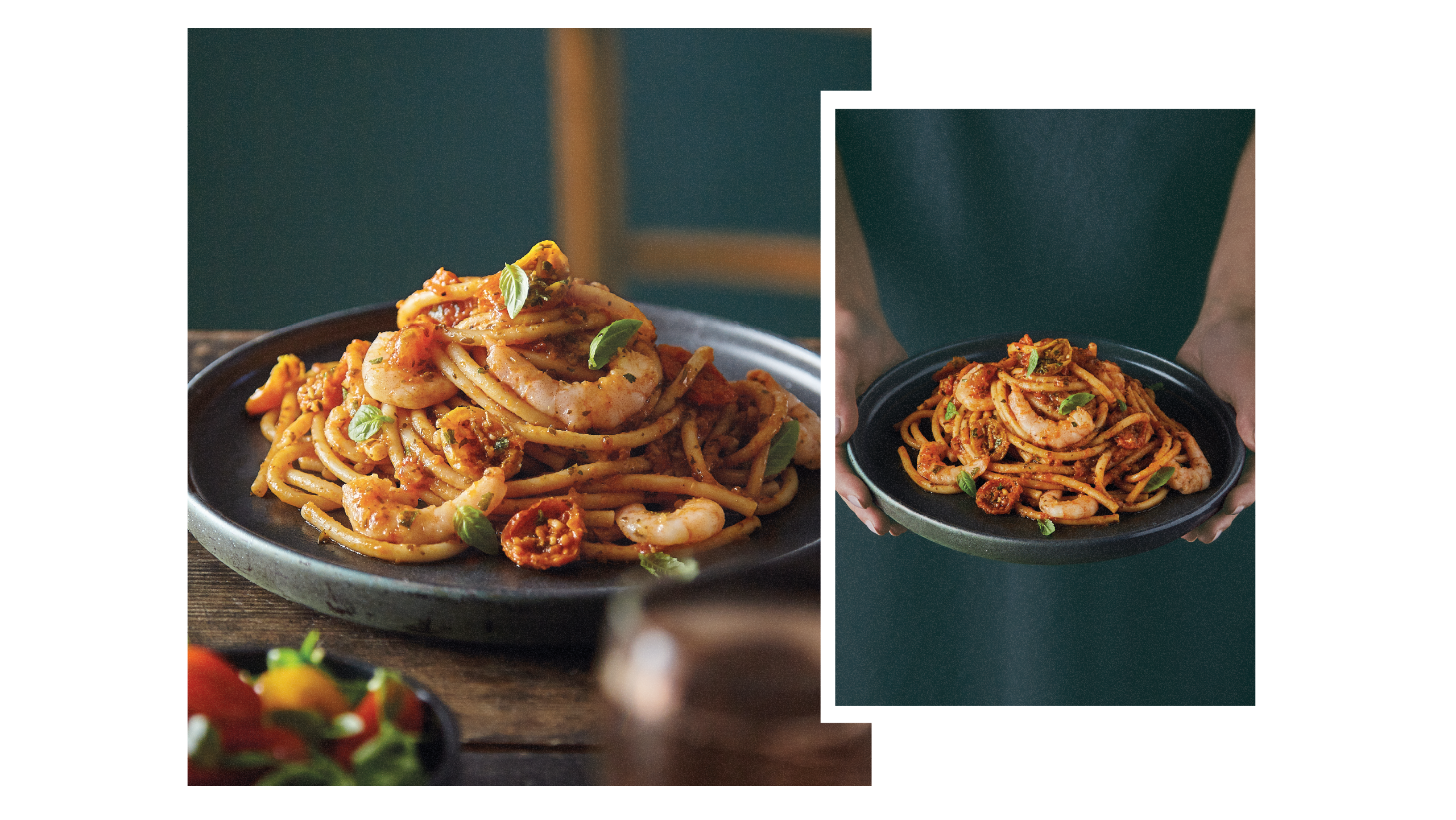
Getting food photography right requires four fundamental things.
- Lighting: The foundation of food photography. Lighting dictates more than just how visible the food is. Bright lighting can feel energetic and healthy, while dark, moody lighting creates a sense of premium luxury and comfort.
- Styling: A perfectly cooked dish is rarely what photographs best. Food stylists use specific techniques or replacement ingredients to control how a dish looks on camera.
- Composition: How food is framed changes how consumers perceive it. An overhead shot of a dinner table feels like a carefully curated canvas, while an eye-level shot showcases layers and textures, making the food look ready to eat.
- Post-production: The final step in creating a tempting image. Retouching brings out the finer details, removes distracting blemishes and fine-tunes the image to achieve the desired mood.
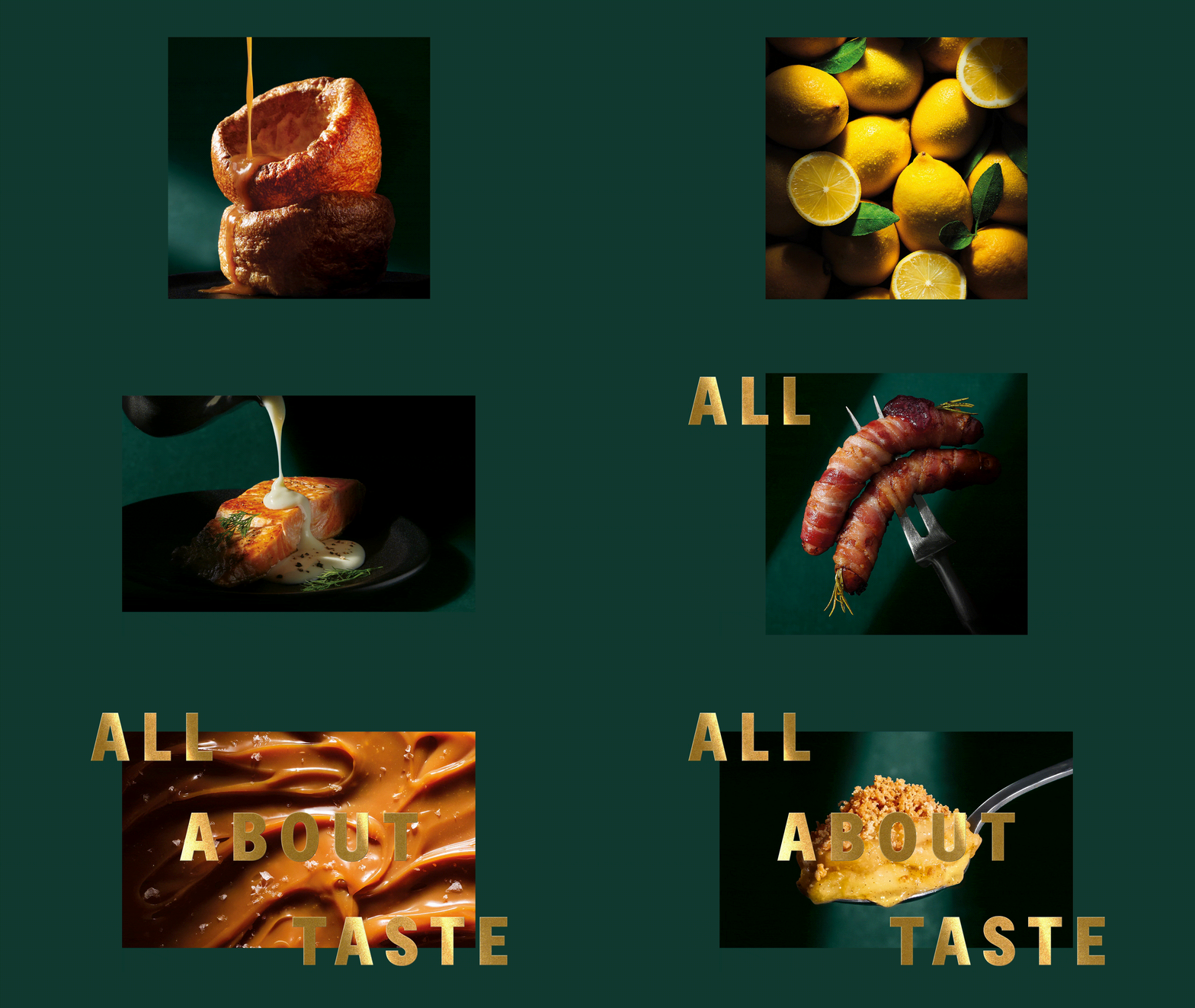
ASDA’s Exceptional range needed to catch the eye on supermarket shelves, with photography that matched its premium branding. Across meat, fish, bakery and dairy, we needed to create cinematic, food-first imagery. The final results bring mood and drama to every shot while putting the food in the spotlight, drawing consumers to what matters most: the mouth-watering appeal.
Creative that considers every angle
Getting photography right for food and drink packaging comes down to having the right team behind it. Designers, art directors, photographers, stylists and retouchers each play their part in creating imagery that connects with audiences and makes products look irresistible.
As food and drink packaging experts, we understand how consumers shop and what makes a product stand out. It’s in our DNA. From brand strategy and brand creation to artwork and photography, we consider every detail to make sure your brand launches with impact.
Need mouth-watering food photography to bring your food and drink packaging to life? Let’s make it happen together. Get in touch to start the conversation.


Got a brand challenge?
Whether you are looking to define your brand strategy or need a fresh new identity - let’s solve it together!
We know how to create meaningful brands that connect with audiences and pack a punch.
Drop us a line to hello@our-creative.com and we’ll get back to you soon.
CREATING LASTING IMPACT... TOGETHER.

